
Jay Le Roux Dillon, Ed.D.
Scholar. Practitioner. Redhead.
I'm a social scientist, musician, and consultant who has spent 20 years trying to answer one question:
Why do some alumni give — and others don't? And is there anything a school can actually do about it?
The answer I found changed the way I think about advancement. Beneath the noise of engagement metrics and demographic data — like harmony beneath a melody — there's a deeper signal. It's called identity. And once you learn to listen for it, everything else makes sense.
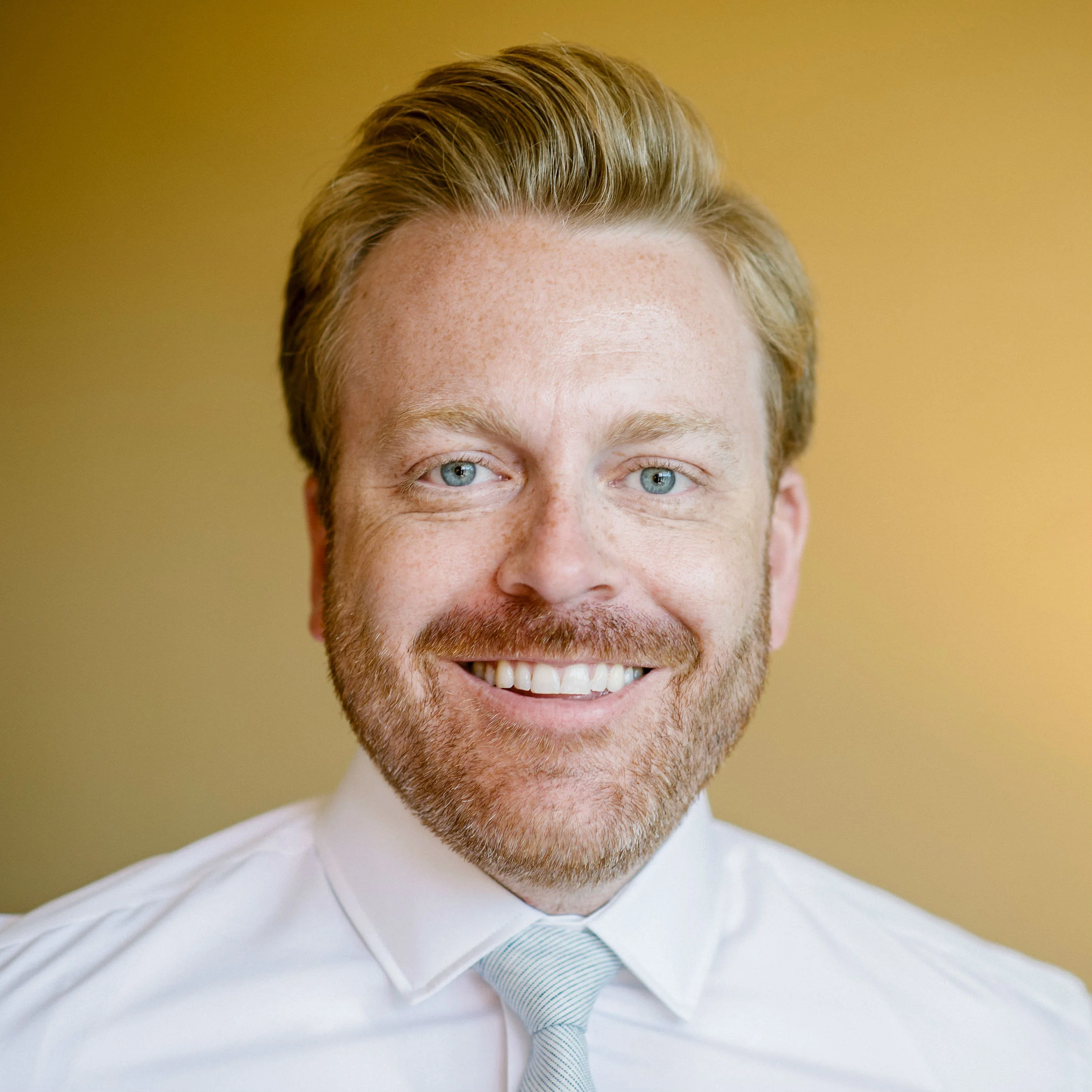
I grew up in Riverside, California, in a house full of music. My parents played, and so did I — eventually well enough to earn a master's degree in music from UCLA. Like most musicians, I needed a way to pay for graduate school. So I took a job making phone calls to UCLA alumni.
That turned out to be the most important decision of my career.
In a single year I made 19,000 calls — a record at the time. Night after night, I improvised my way through conversations with alumni from every walk of life, every graduation year, every level of connection to the university. Playing jazz and leading bands had trained me perfectly for this — reading the room, following the energy, finding the moment when a conversation turns.
What I noticed across all those calls was a pattern that nobody in advancement was talking about. Some alumni lit up when you mentioned the university. Others were polite but distant. The difference had nothing to do with how many events they'd attended or whether they'd opened the last email. It was something deeper. Something psychological.
That question stayed with me for the next fifteen years as I built my career in higher education advancement — from those UCLA phone banks to Director of Alumni Engagement at the University of San Francisco, to Executive Director of Alumni Strategic Initiatives at UCLA, to my current role as Chief Alumni Officer & Strategist at the University of California, Berkeley.
Why do some alumni give — and others don't? And is there anything a school can actually do about it?
When I finally sat down to write my dissertation, I went looking for the answer in the research literature. I found it in social psychology — specifically in the concept of identity. Alumni who see themselves as part of their institution's story give more, give more often, and give at higher levels. That wasn't a hunch. It was a hypothesis I could test.
I didn't want to do another qualitative case study of a single alumni population at a single school. I wanted to quantify identity in terms that advancement professionals could actually understand and apply. So I built a framework, designed a measurement tool, and went to work.
Eight years later, the Alumni Identity framework has been validated across 11 institutions and 42,000 alumni. It is the only empirically validated model for predicting alumni philanthropic behavior based on identity rather than engagement. The IDeal Donor Score — the proprietary tool that operationalizes the framework — helps advancement teams identify their best prospects before they give.
I'm a redhead, a father of a redhead and a blonde, husband to an amazing wife, and I still play music. I believe that who you are is the most powerful predictor of what you'll do. That's true for alumni. And it's true for the work I do.
Credentials
Ed.D., Organization & Leadership — University of San Francisco
M.A., Music — UCLA
B.A., Music — UCLA
Chief Alumni Officer & Strategist, University of California, Berkeley
Former Executive Director of Alumni Strategic Initiatives, UCLA
Former Director of Alumni Engagement, University of San Francisco
Creator, IDeal Donor Score™, Alumni Identity Score™
Research spanning 11 institutions and 42,000 alumni